

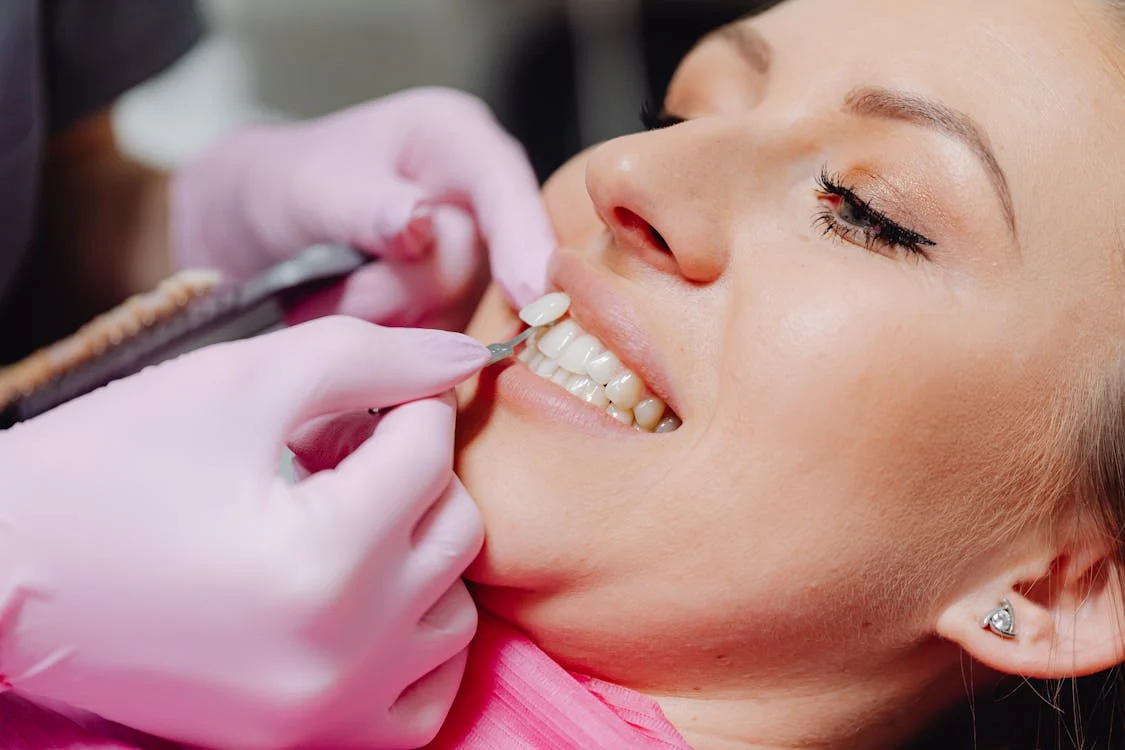
A concern about the appearance of a tooth can be worth discussing even when it causes no pain. A persistent chip, an uneven edge, or discoloration may affect how someone feels about smiling. That does not mean porcelain veneers are necessary, or that they are the best answer.
A useful consultation begins with the concern, not the treatment. For adults considering cosmetic dentistry in Orlando, understanding what veneers can change, what they cannot address, and what alternatives exist makes the conversation more productive.
Start with what bothers you
Try describing the concern in ordinary language. Is one tooth darker than the others? Does a chipped edge catch the eye in photographs? Is the issue the width of a tooth, a small gap, or the overall balance of the smile?
These are different questions, even when they look similar in a mirror. A dentist can examine the teeth and explain whether the concern is mainly cosmetic or whether another dental issue needs attention.
A new change in color or shape deserves an explanation before it becomes a cosmetic plan. Covering a visible concern does not establish its cause. Bring up discomfort, a past injury, or recent changes during the discussion rather than focusing only on the desired appearance.
Understand what a veneer changes
A porcelain veneer is a custom-made covering bonded to the front surface of a tooth. Unlike a crown, it does not cover the entire tooth. Veneers can change the visible shape or color of selected teeth and can mask some gaps or irregularities.
That makes them one option for certain appearance concerns, not a substitute for every other type of dental care. The position of the teeth, the bite, existing restorations, and the condition of the gums all belong in the assessment.
Ask the dentist to explain the proposed change tooth by tooth. A plan is easier to evaluate when it identifies which concern each veneer would address, rather than starting with a predetermined number of teeth.
Ask about alternatives before deciding
Whitening, composite bonding, orthodontic care, or leaving a tooth unchanged may be part of the discussion. The options depend on the cause of the concern and the condition of the mouth.
For example, changing a tooth’s color is a different task from rebuilding a chipped edge. Moving teeth is different from changing how wide they appear. Ask how each possible approach would address the specific concern and what it would leave unchanged.
A consultation about porcelain veneers at Legacy Smiles is a natural place for those comparison questions. A service description can introduce an option, but an individual examination is what helps determine whether that option is appropriate.
Take enamel preparation seriously
The American Dental Association describes veneer treatment involving enamel removal as irreversible. A small amount of enamel may be removed to create space for the covering, and that change cannot simply be undone if preferences change later.
Ask how much preparation the proposed treatment involves and what long-term maintenance or replacement could mean. The explanation should be specific to the plan rather than based on a general promise of minimal preparation.
If a practice discusses a no-preparation approach, ask why it would suit the teeth involved and what trade-offs it carries. The label alone does not establish suitability or quality. Understanding the planned change matters more than choosing the most appealing terminology.
Put dental health before appearance
The ADA notes that problems such as decay or gum disease need attention before veneers are placed. A cosmetic covering does not make an unhealthy tooth healthy. An examination helps establish whether other care should come first.
Clenching, grinding, and the way upper and lower teeth meet can also affect the discussion. Share any known history rather than assuming it is unrelated to appearance. The dentist can explain how those factors influence the available options.
A consultation may lead to a different recommendation, a staged plan, or a decision not to pursue veneers. That is a useful outcome when it clarifies what the mouth needs and what a cosmetic procedure can realistically accomplish.
Review appearance and upkeep expectations
Photographs can help explain preferences, but another person’s smile is not a blueprint. Ask how shade, shape, and proportions would be selected for the existing teeth and facial features.
Also ask how the proposed result will be reviewed before final placement. Clarify what adjustments may be possible and what happens if the appearance does not match expectations at that stage.
Veneers can chip, wear, loosen, or need replacement over time. Ask how follow-up care and repairs are handled, and request a written estimate explaining the proposed work. Cosmetic coverage under a dental plan should be confirmed separately rather than assumed.
There is no need to decide on treatment simply because a cosmetic concern has lasted a long time. The right time to ask is when clearer information would help. A good discussion leaves the patient understanding the alternatives, the irreversible changes involved, and the limits of what veneers can do.
