

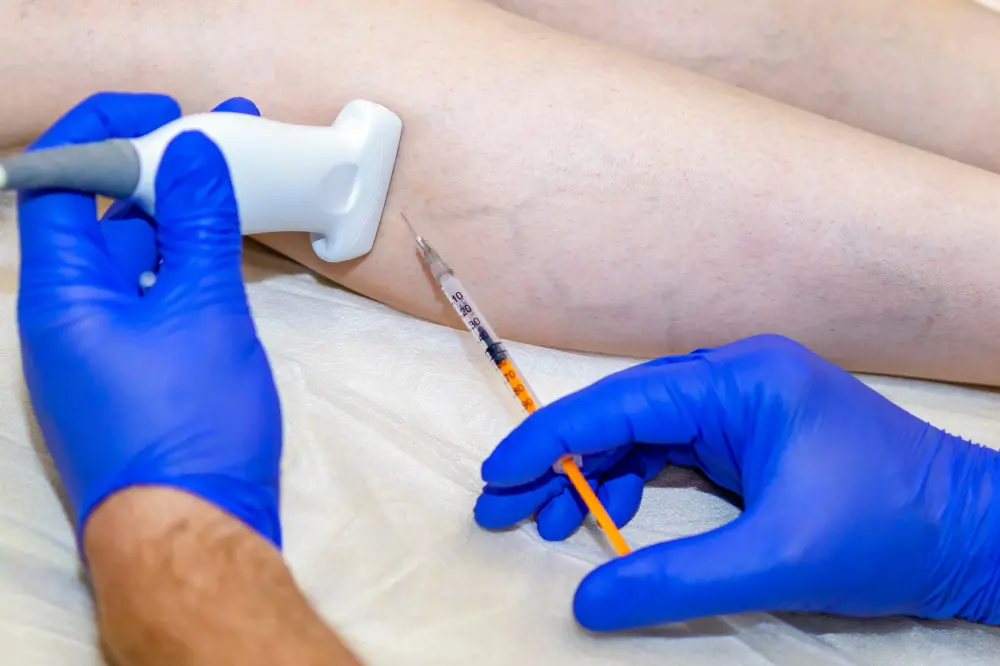
Varicose veins are large, twisted blood vessels, and spider veins are smaller, web-like discolorations on the skin. Medical providers treat these conditions with two main procedures. While radiofrequency ablation uses heat to close damaged blood vessels, sclerotherapy involves injecting a solution to collapse them. Both treatments redirect blood flow to healthier veins, and patients may experience relief from pain and other symptoms.
Causes of Varicose Veins
While healthy veins push blood toward the heart, damaged valves allow blood to pool backward. This pooling stretches the vein walls, and they eventually bulge under the surface. A doctor might recommend radiofrequency ablation for these enlarged vessels. Having a family history of varicose veins increases a person’s risk of developing the condition.
Certain lifestyle factors also contribute to vein damage. Standing for long periods puts extra pressure on the lower body, and this pressure weakens the blood vessels over time. Pregnancy increases the volume of blood in the body, which places extra strain on the circulatory system.
Details of Radiofrequency Ablation
Radiofrequency ablation is a minimally invasive treatment, and it targets larger varicose veins directly. When a surgeon inserts a thin catheter into the diseased vein, the device delivers targeted heat energy to the vein wall, and the tissue reacts by closing off. Blood reroutes itself to nearby healthy pathways after the procedure finishes.
Because the procedure uses local anesthesia, patients remain awake during the treatment. The recovery process moves quickly, and individuals usually resume their normal activities within a few days. Plan to have someone to drive you home from your procedure.
Steps of Sclerotherapy Treatments
While thermal treatments handle large vessels, doctors rely on sclerotherapy for smaller spider veins. The provider injects a chemical solution directly into the affected vein, and this liquid irritates the internal lining of the vessel. Because the irritation forces the vein to swell shut, it blocks the flow of blood completely, and the vessel dies. The body eventually absorbs the treated vein.
Foam sclerotherapy offers another variation of this method, and it works well for slightly larger vessels. Because the physician mixes the chemical solution with air, the mixture creates a thick foam consistency, and the bubbles expand. The foam displaces blood inside the vein more effectively than a standard liquid. The physician tracks the foam with an ultrasound monitor while the injection occurs.
Results of Both Procedures
Patients notice visible improvements within a few weeks, and the physical discomfort diminishes quickly. Because the body reabsorbs the closed tissue, the treated veins fade away permanently, and the skin smooths out. The healing timeline varies slightly among individuals.
To prevent new varicose veins from forming, patients can prioritize regular exercise to improve their circulation. When patients adopt an active lifestyle, weight management also reduces strain on the legs. These daily routines protect the circulatory system long-term, and they promote overall wellness.
Get Treatment for Varicose Veins
Vein issues cause physical discomfort, and they also affect the way a person’s skin looks. These medical procedures are reliable treatments for varicose veins and spider veins. While thermal ablation closes vessels with heat, chemical injections collapse smaller veins, and both methods provide similar results. If you want to learn more about treatment for varicose veins and spider veins, consult a provider near you.
