

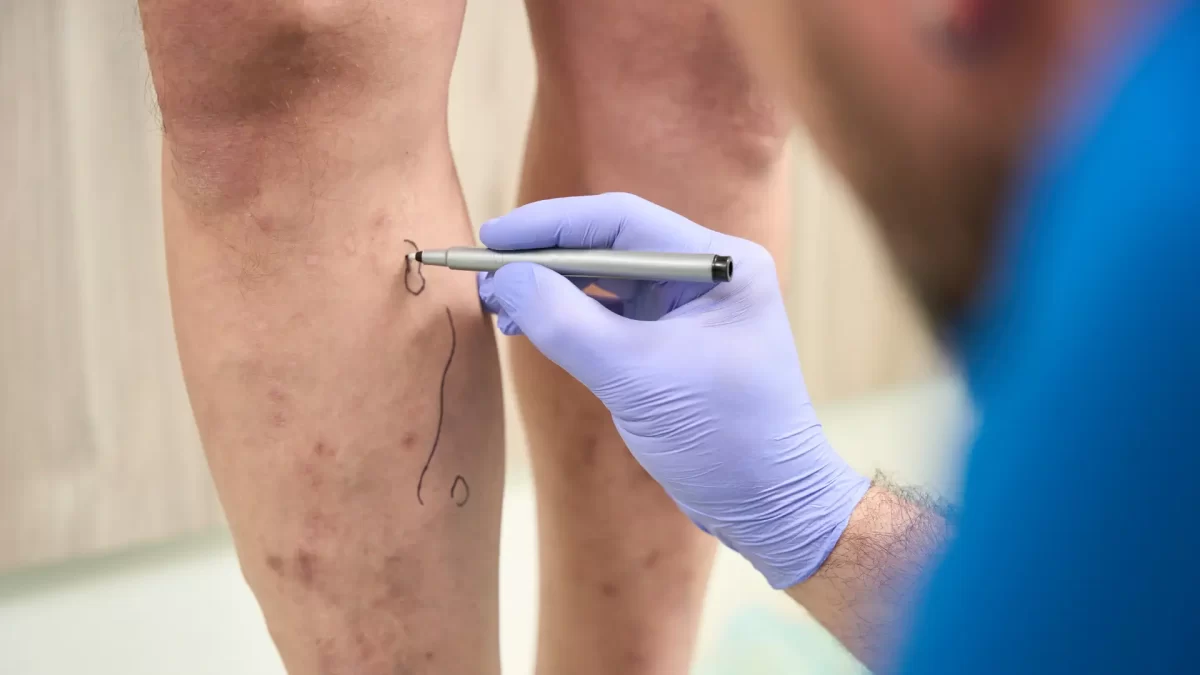
Varicose veins are enlarged, twisted blood vessels beneath the delicate surface of your skin, and doctors evaluate this condition to plan the most appropriate approach. Because the one-way vein valves fail over time, blood pools heavily in your lower leg regions. You may notice dark bulging lines on your calves, and your legs ache regularly throughout the day. Here is more information on diagnosis and treatment options for this condition:
Examination
When you visit the medical clinic for a detailed evaluation, doctors check your legs for visible swelling. Healthcare providers look closely for distinct skin color changes around your ankles and lower leg areas to find varicose veins. They may ask about your daily physical symptoms, and they review your personal health history in detail. Diagnostic ultrasound scans clearly show the direction of blood flow inside your affected lower veins.
The ultrasound machine creates detailed digital images, and the doctor accurately measures your overall vein function. If the blood flows backward through the valves, the trained medical technician records this exact issue. Your healthcare provider explains the objective ultrasound findings to you directly after the imaging scan.
Sclerotherapy
Trained doctors inject a liquid chemical solution directly into the targeted damaged leg vein. The medical solution irritates the vessel lining, and the abnormal vein collapses inward very quickly. After the treated vein seals itself completely shut, your blood naturally reroutes to healthier pathways. This outpatient injection procedure effectively targets specific types of superficial vascular issues on your lower body:
- Small isolated varicose veins
- Tiny purple spider veins
- Swollen surface vessels
Angiography and Stenting
While doctors rarely use this specific method for standard cases, angiography maps deep pelvic veins thoroughly. A vascular specialist carefully inserts a very thin plastic tube into a large vein in your groin. Contrast dye flows through the long catheter, and continuous X-ray images reveal hidden deep vascular blockages. Sometimes a permanent metal stent props open the narrowed blood vessel to restore proper internal flow.
Ablation Treatments
Endovenous thermal ablation uses intense, focused laser heat to close off the damaged blood vessel safely. While you rest comfortably on the padded exam table, the doctor numbs your leg with local anesthesia. A specialized laser fiber heats the surrounding tissue, and the stretched vein walls shrink immediately. Your body eventually absorbs the safely sealed blood vessel over time.
Radiofrequency ablation uses strong targeted sound waves, and this modern technique works very similarly to lasers. The medical provider inserts a tiny radiofrequency electrode through a very small puncture in the skin. As the medical device heats up inside the leg, the targeted saphenous vein shuts down completely. Patients wear tight compression stockings on their affected legs after finishing this brief clinical visit.
Because these modern ablation methods use very small physical incisions, visible scarring stays incredibly minimal afterward. You walk around the medical clinic immediately, and you return home safely on the exact same day. The standard physical recovery process normally takes just a few short weeks to complete in total. The dedicated healthcare team monitors your physical healing progress carefully during routine follow-up office visits.
Get Treated for Varicose Veins
Many different medical procedures treat bothersome swollen varicose veins effectively in professional clinical settings today. You have multiple safe medical treatment options, and vascular doctors guide your final treatment choice. When you are ready, schedule a diagnostic medical appointment with a local vein specialist. Call a local vascular clinic today to set up your initial comprehensive vein evaluation consultation.
